Previous project / Next project
Cultural venues are not merely spaces that preserve knowledge. They are open spaces capable of fostering connections, embracing diversity, and transforming knowledge into a collective experience.
The new Varna Regional Library was born out of this idea.
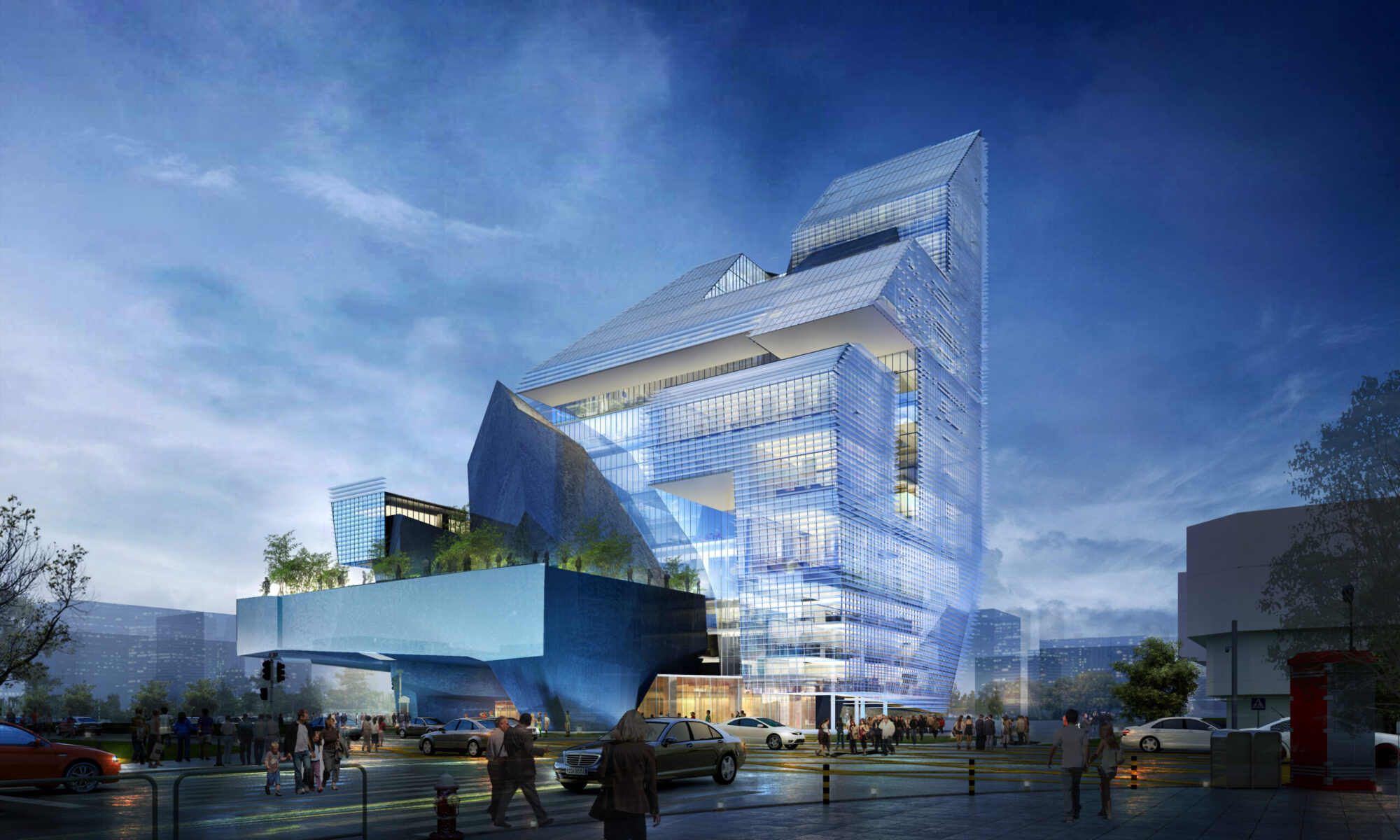
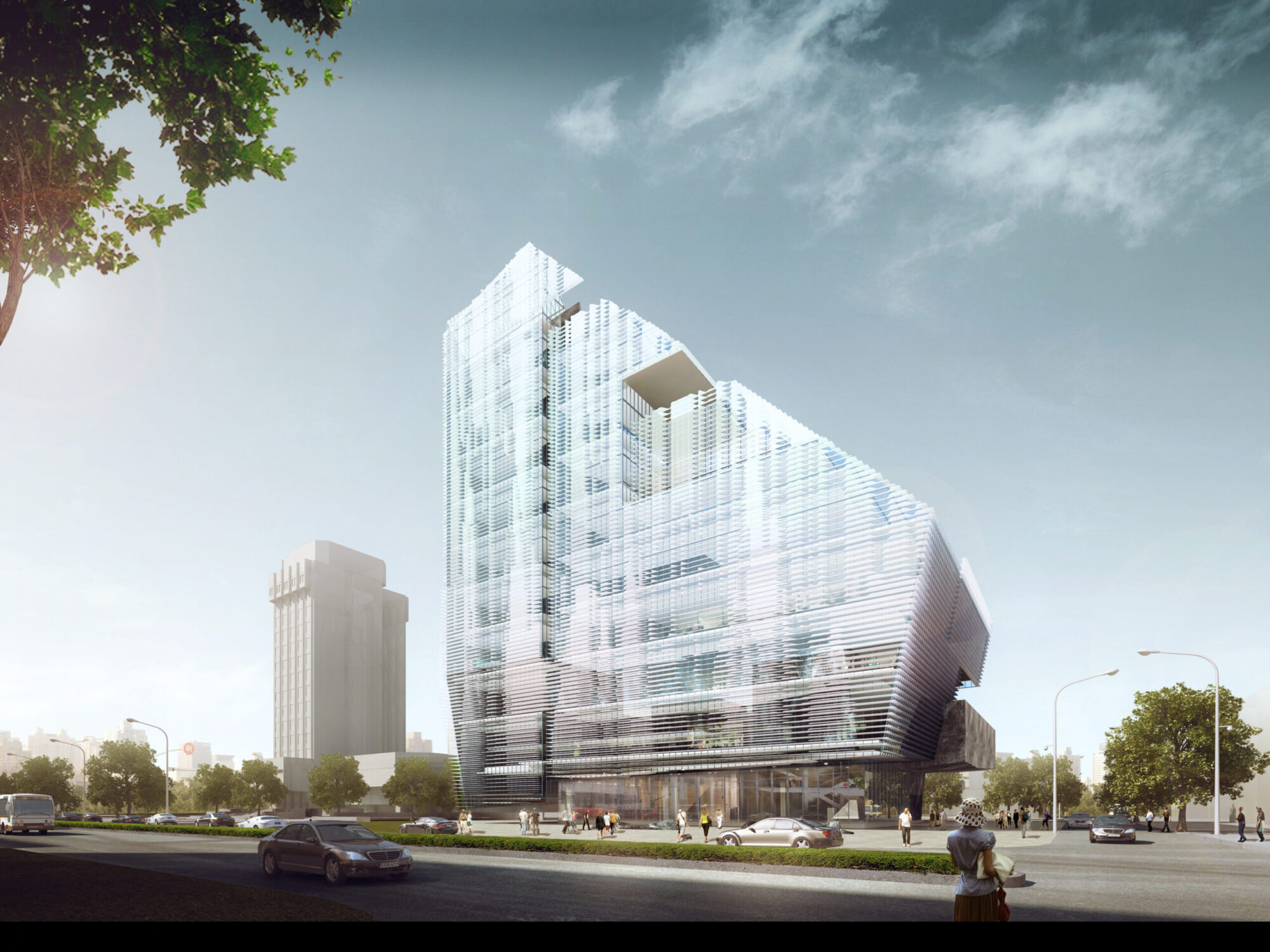
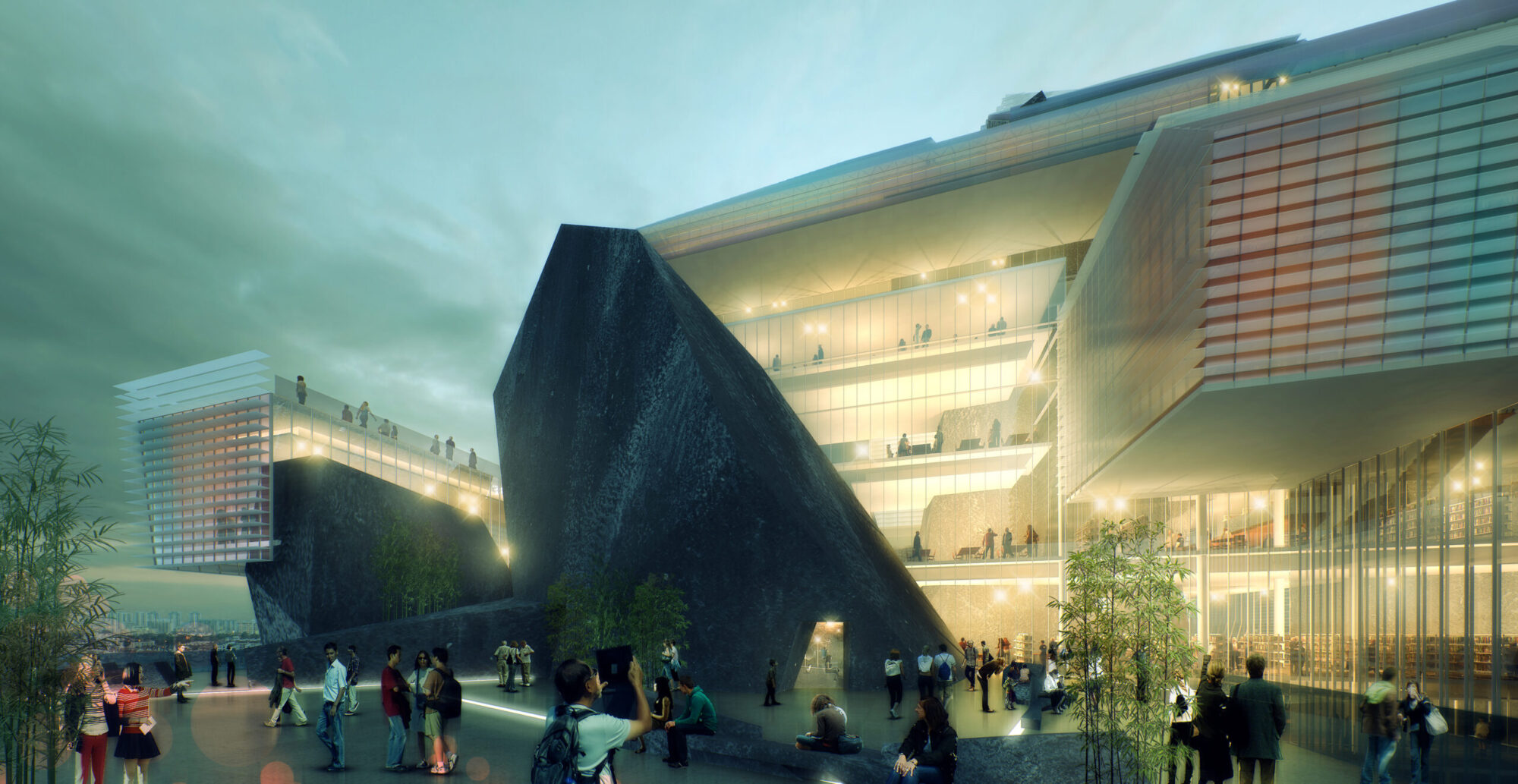
A transparent, luminous volume opens up to the city as an invitation to discovery. A large ice sculpture holds a fossil within it: ancient matter, memory, a trace of time.
Two images tell the story of architecture. The transparency of a mind that opens up. The depth of knowledge that builds layer upon layer.
Between these two dimensions, a vertical landscape of knowledge takes shape, where culture, public space, and the city converge.
A building that isn’t merely walked through. It is discovered, layer by layer.
Key data
Figures
Status
The Ice Shell
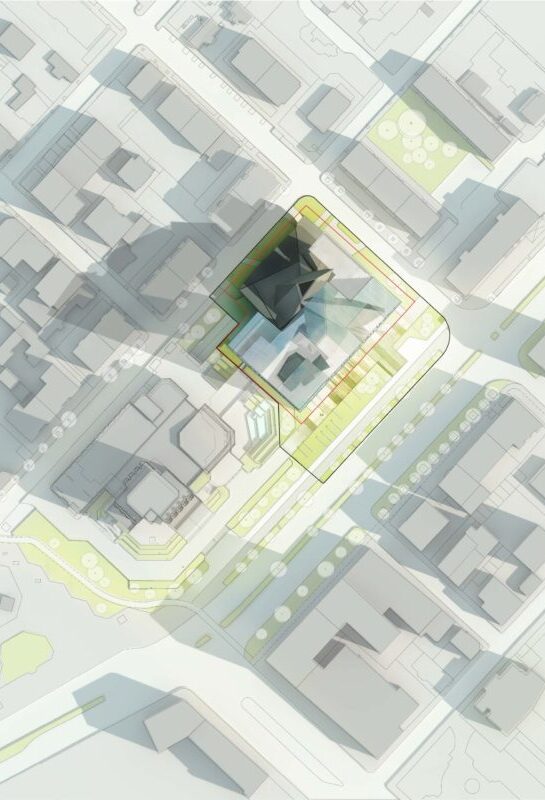
Form arises from the city.
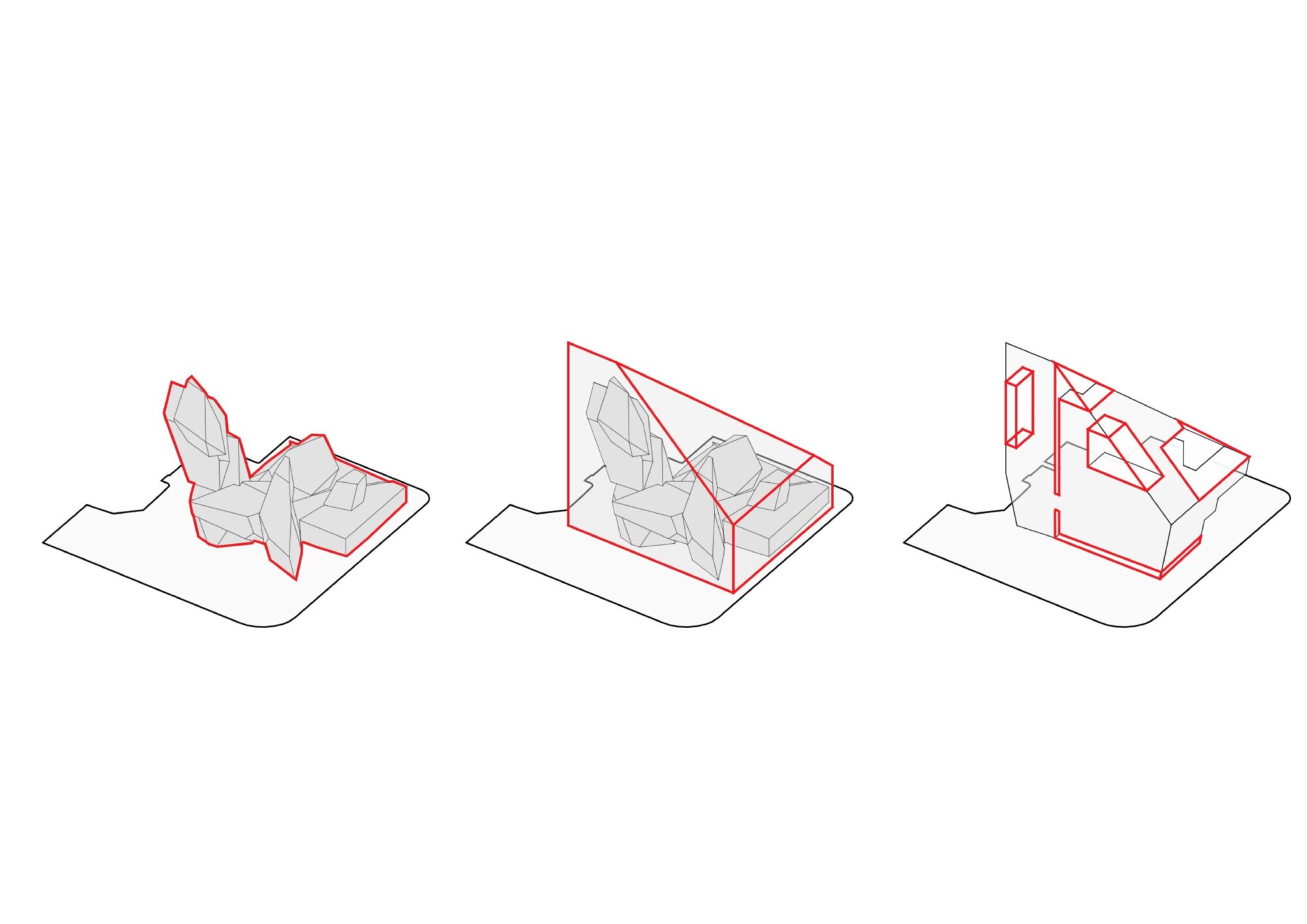
A volume defined by the rules of its context is gradually hollowed out, carved, and opened up to light and connections. The built mass is thus transformed into a vertical landscape of voids, terraces, and communal spaces.
The library is not simply contained within the building: it runs through it.
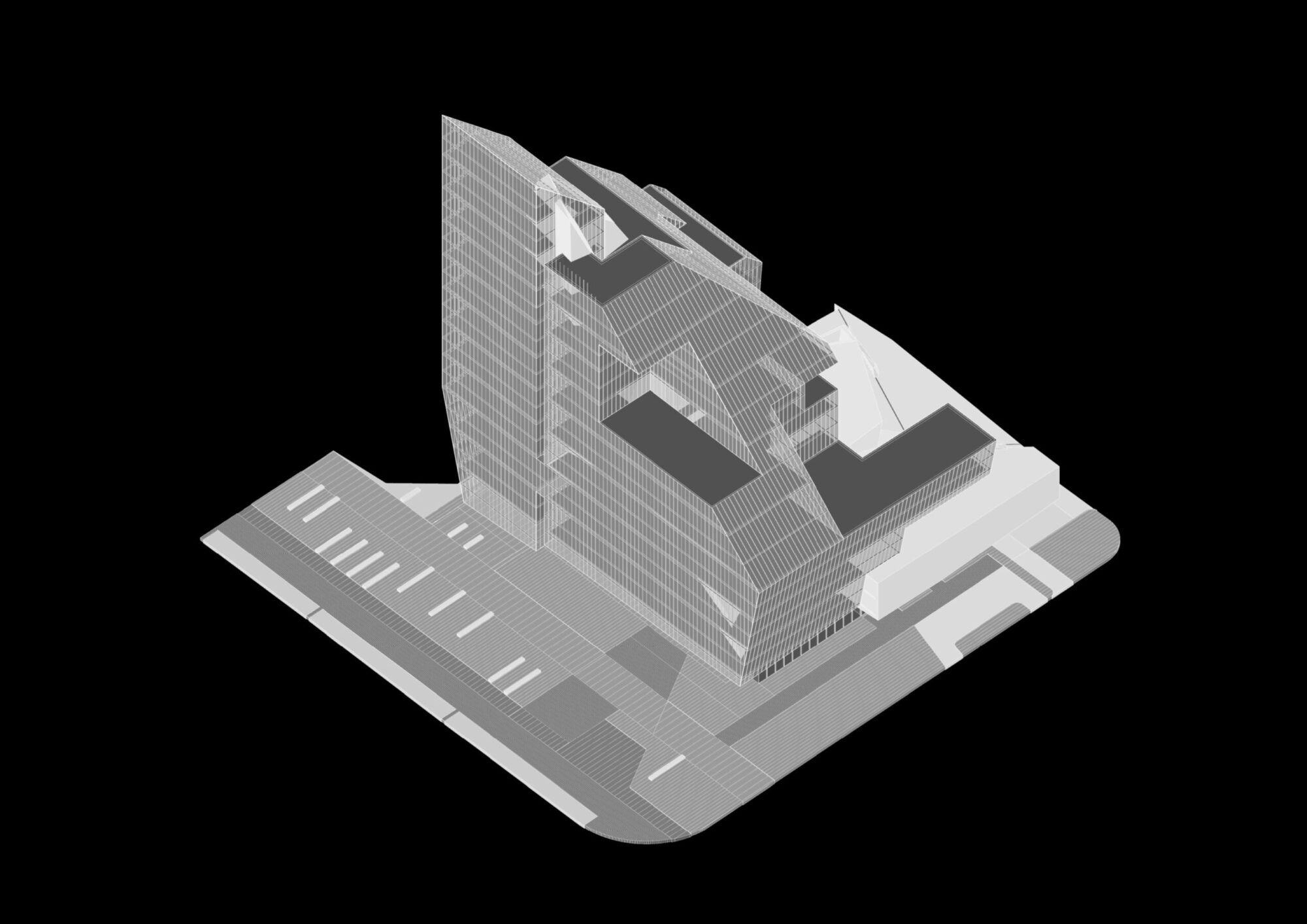
A transparent skin envelops this interior landscape, allowing its life and layers to be perceived. The facade becomes an osmotic and high-performance element, capable of connecting the interior and exterior, light and matter, architecture and the environment.
The building breathes with the city.
The Fossil
Beneath the transparency, a deeper substance emerges.
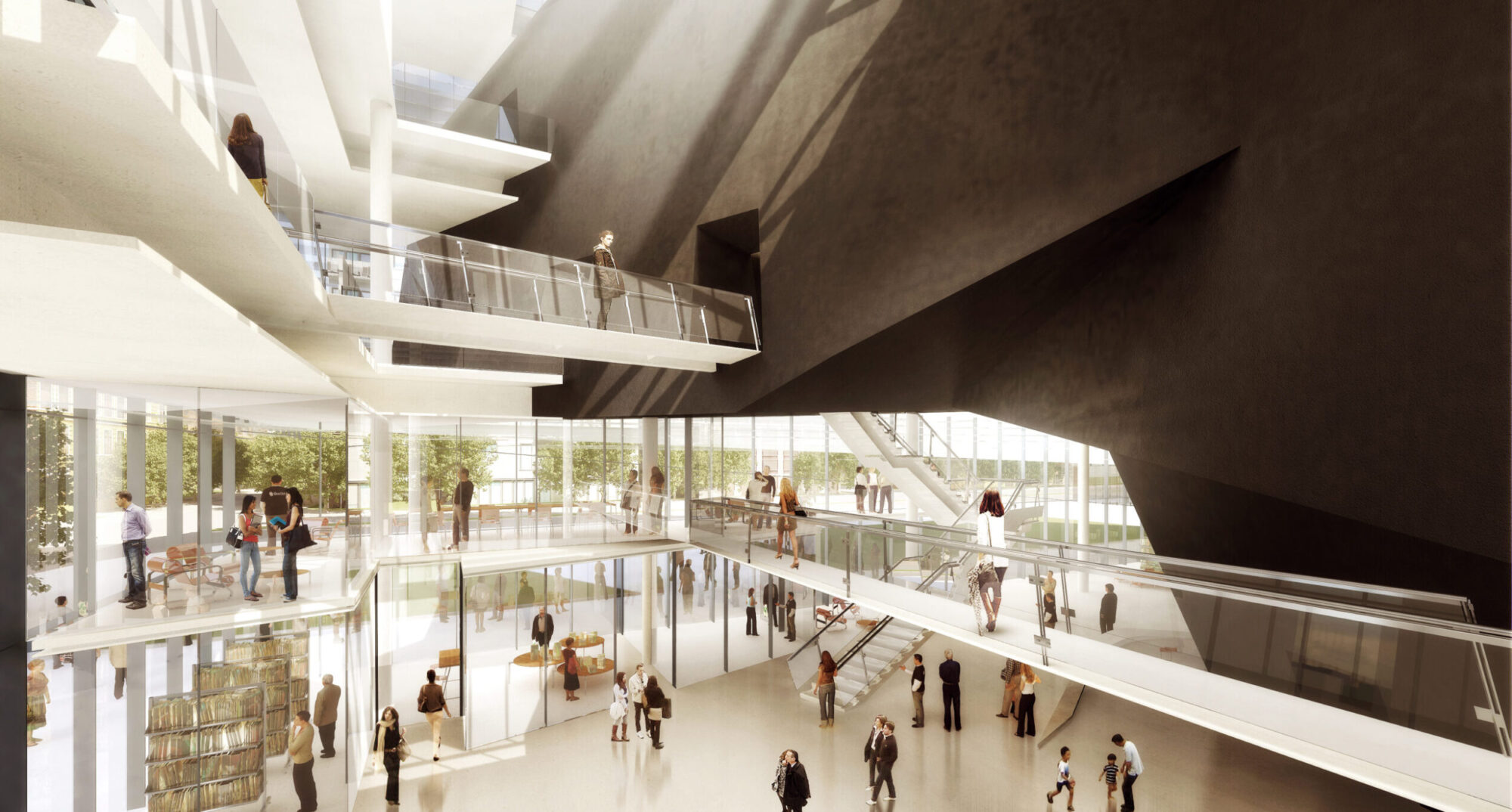
The fossil is the heart of the library: a presence that is both archaic and contemporary, a metaphor for knowledge built up over time through accumulations, traces, and continuous transformations.
But the fossil is not merely a symbol.
It is structure, orientation, and movement.
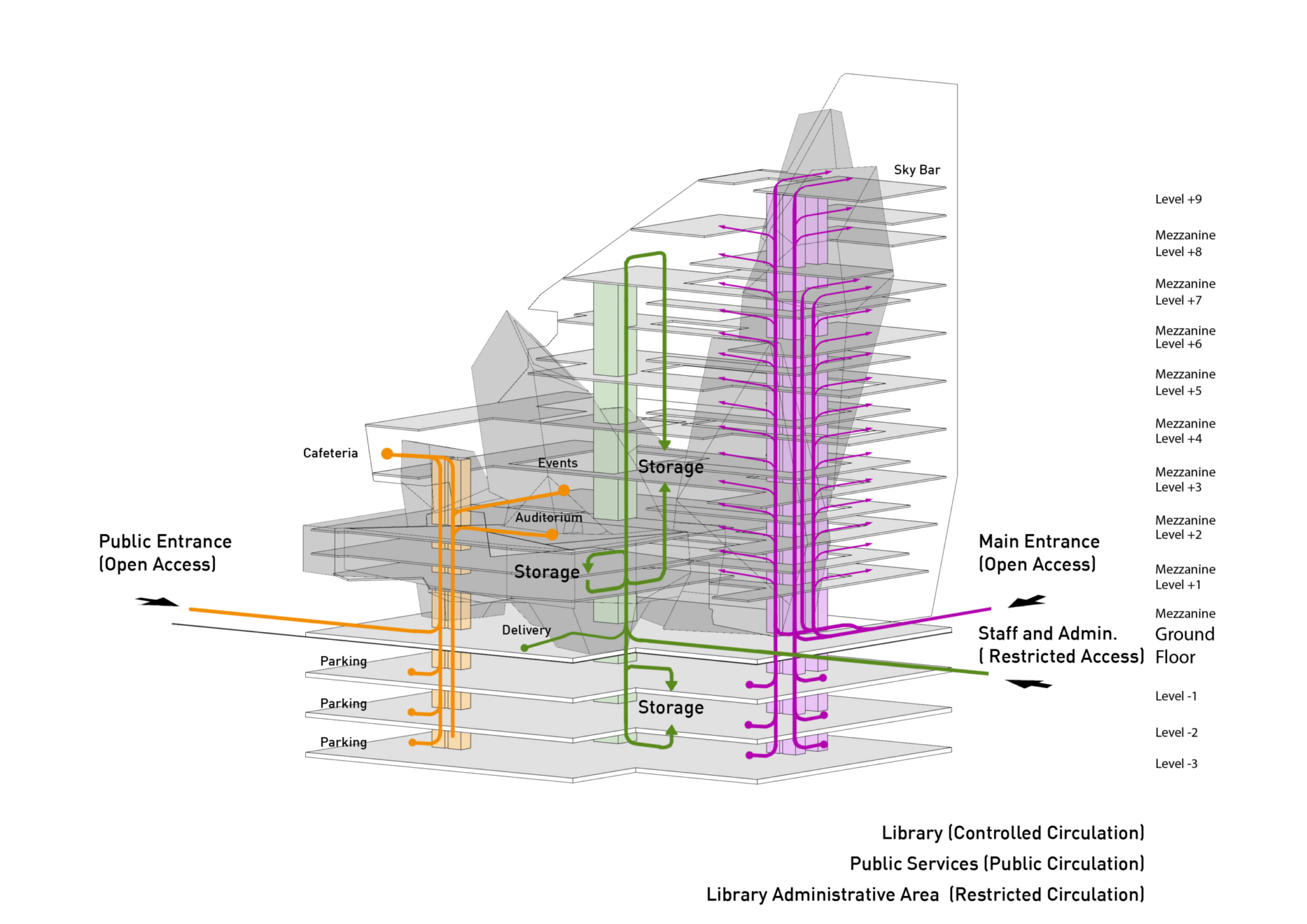
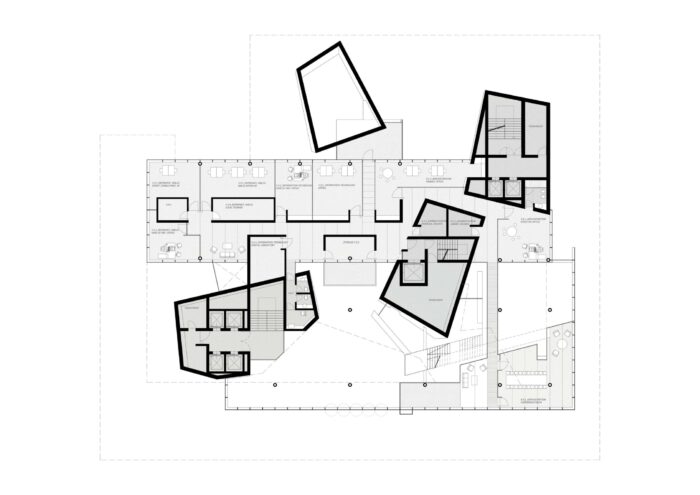
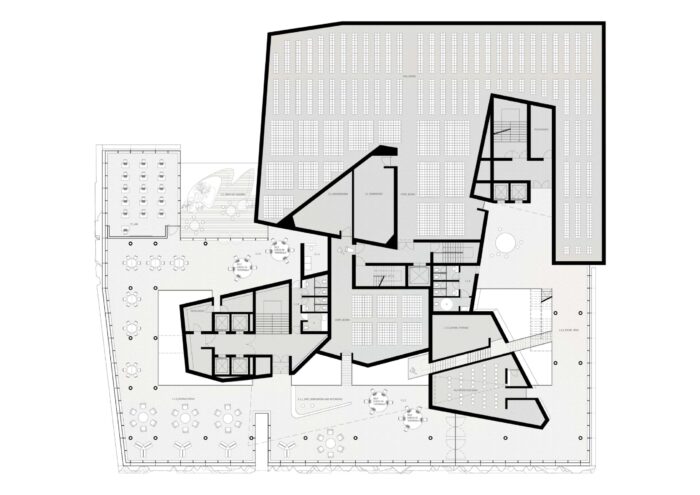
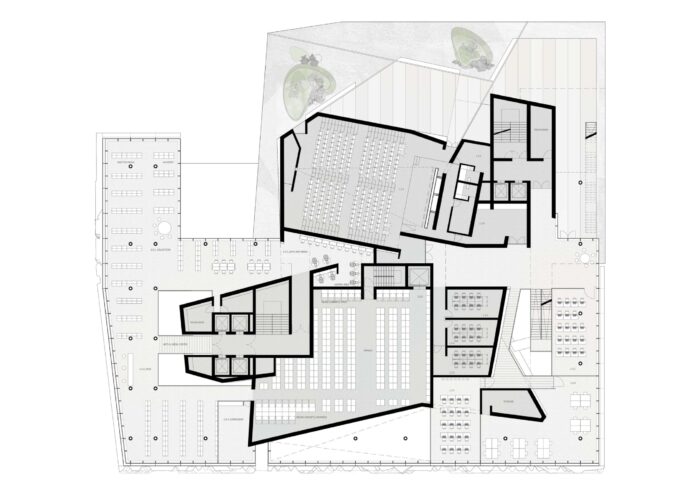
Inside, vertical connections run through the building and link its various spaces: the library areas and those dedicated to public life, the auditorium, the exhibition spaces, and the sky bar.
Around this core, functions and pathways are clearly organized, making the building intuitive, accessible, and open to multiple ways of being experienced.
Memory thus becomes the infrastructure of the present.
A library is part of the city
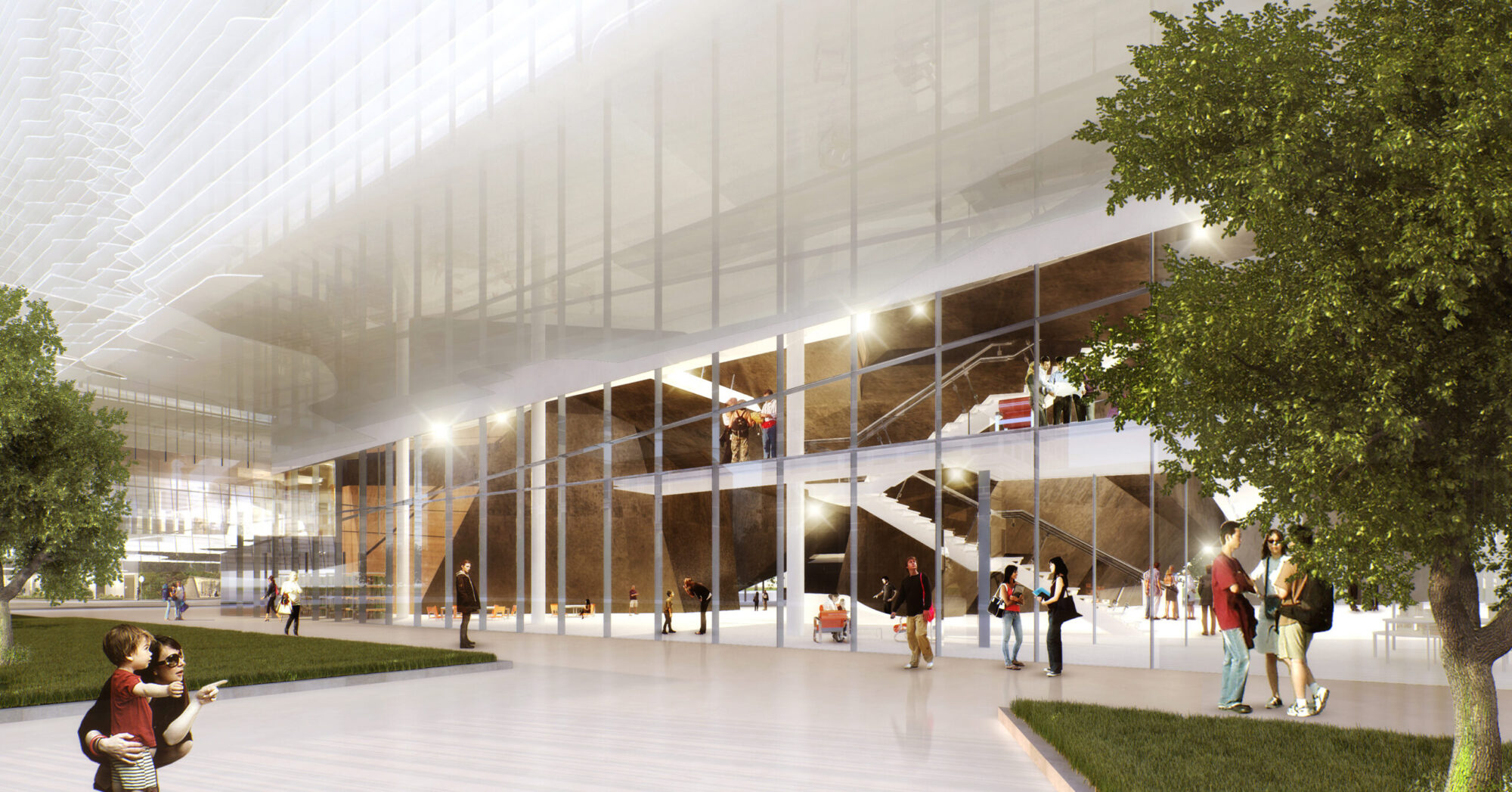
A library doesn’t just belong to those who come to read. It belongs to the city.
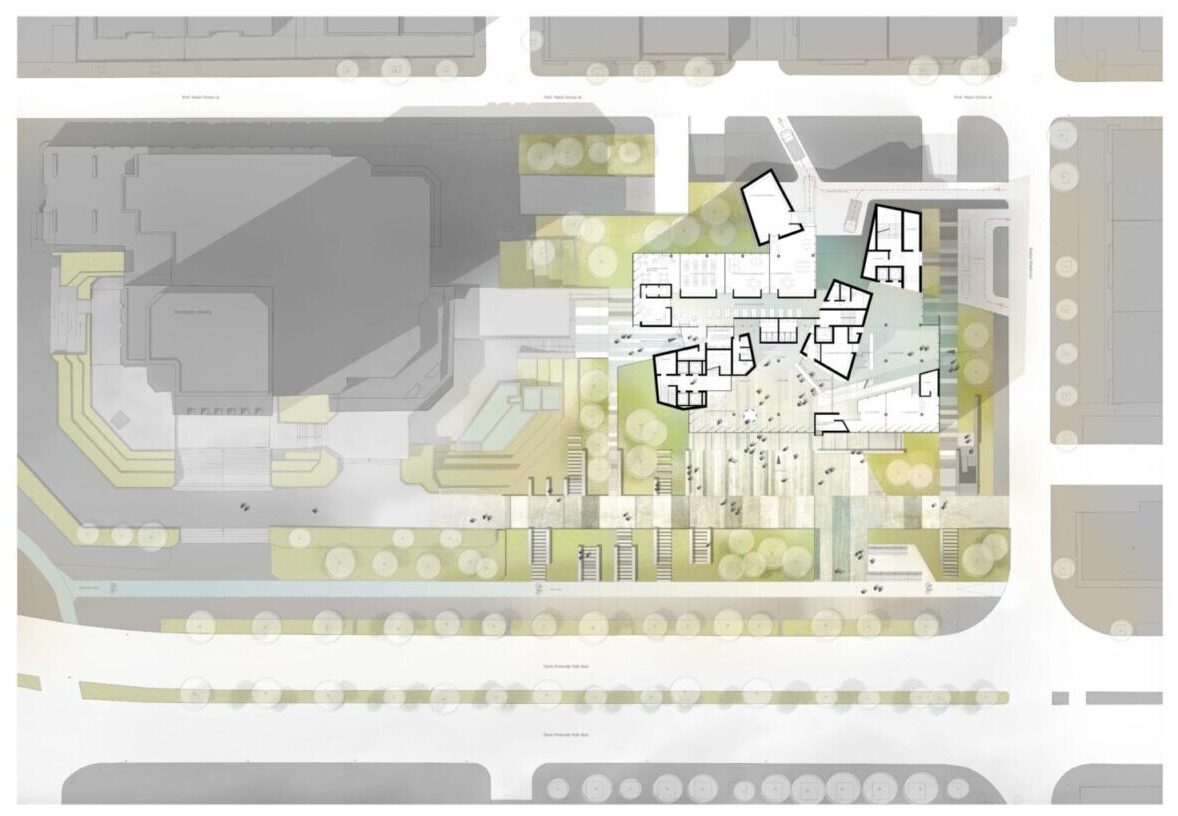
That is why public space does not stop at the building’s threshold, but enters the building, passes through it, and rises upward. The entrance becomes a covered plaza. The pathways create opportunities for people to meet.
Open spaces, terraces, and communal areas guide visitors through the various levels, offering new views of Varna and the sea.
The library becomes a small fragment of a vertical city: a place to study, meet, linger, observe, and participate. A landmark that does not seek to isolate itself from its surroundings, but rather to forge new connections with them.
Knowledge as experience
Knowledge is not static. It accumulates, transforms, and passes from one person to another.
The Varna Regional Library translates this movement into architecture. From the fossil housed at its core to the transparency of its shell, from the silence of reading to the collective dimension of public spaces, the building continually connects memory and the future, the individual and the community, knowledge and the city.
Because a cultural institution shouldn’t just preserve what we already know. It must create the conditions for us to imagine what we don’t yet know.