

 LENS #06 — Shape Cities
Changing the way we look at Rome.
A recent Reuters editorial uses Corviale as a case study to explore Rome’s possible future.
Susanna Tradati took that idea and tried to take it a step further: perhaps, even before changing Rome, we need to change the way we look at it.
by Susanna Tradati, Co-Founder, Nemesi Architects
THE FLIGHT OF THE SEAGULL
Imagine you’re a seagull flying over Rome.
Take off from a pine tree overlooking the Colosseum. The warm air lifts you above the domes, the Tiber, and the ochre-colored rooftops; below you, the historic city unfolds: palaces, squares, bell towers, and terraces come together to form one of the most recognizable urban landscapes in the world. Follow the bend of the Tiber and continue southwest; little by little, Rome changes shape.
The dense urban fabric thins out, the city blocks open up, and greenery reappears. Villas, rows of pine trees, cultivated fields, and large meadows alternate with infrastructure, modern neighborhoods, and scattered settlements; the countryside enters the city, and the city returns to the countryside.
Then, suddenly, a line appears. Not a bridge, not a road—a white line against the greenery; a building nearly a kilometer long cuts across the landscape like a contemporary aqueduct. Hundreds of identical windows, balconies, ramps, courtyards, and open spaces.
From up there, you don’t yet realize that this is Corviale: you see only a gigantic shape, seemingly out of place among its surroundings and, at the same time, deeply Roman.
You perch on a streetlight in the square and watch.
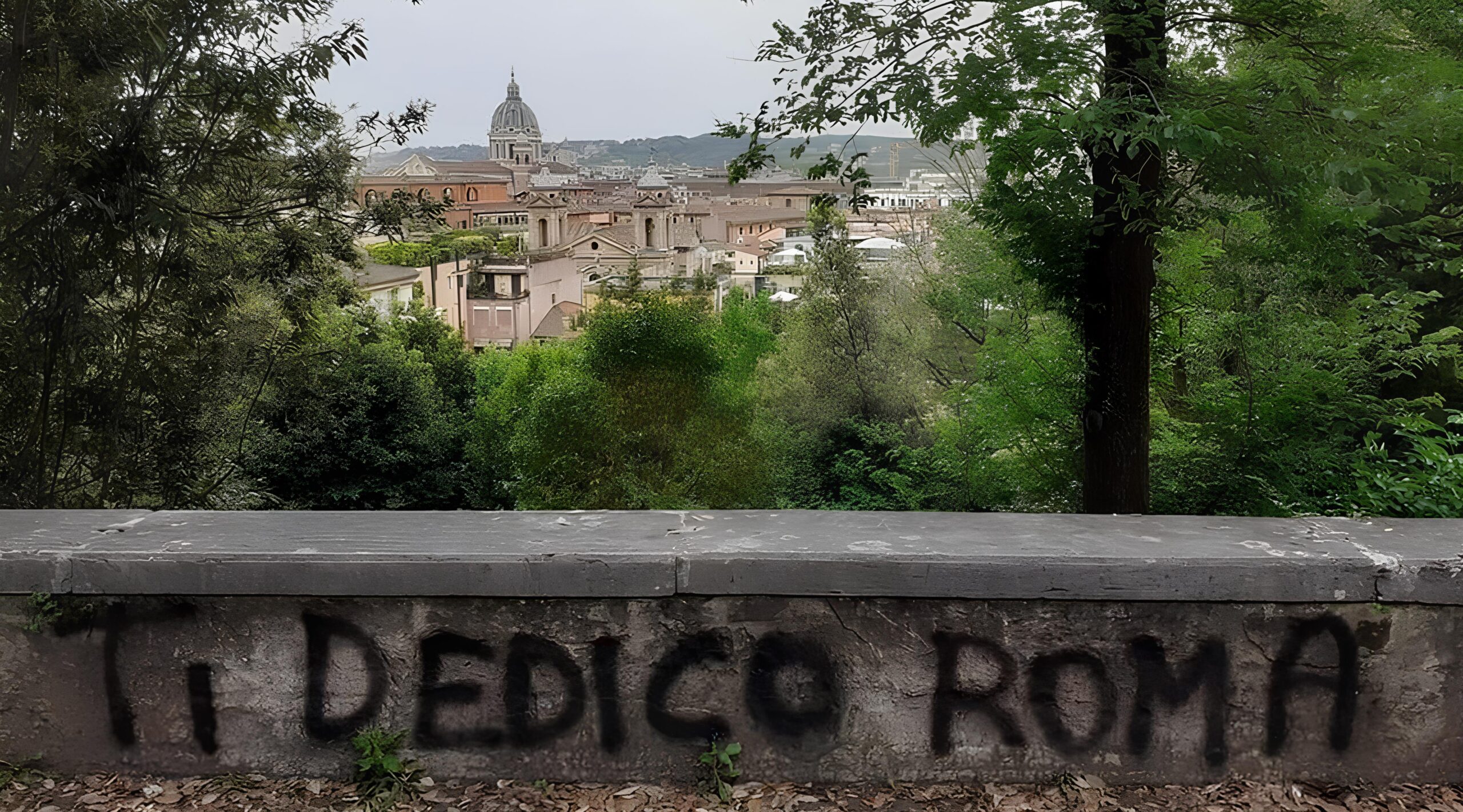
A glimpse of Rome
CORVIALE BEYOND CORVIALE
It is significant that, in its editorial at the end of July, Reuters chose Corviale as the starting point for examining Rome’s future. The article shifts its focus from the established city center to a place that has always been identified with the outskirts, hardship, and unfinished projects, asking: Can Corviale become a testing ground for Rome’s urban transformation? The projects carried out in recent years—and the PNRR in particular—have begun to revitalize spaces, housing, and services, but is this enough to improve people’s lives and bring about profound change?
I don’t think so. Because Corviale is part of a larger system. If we look at it closely, we see a vast architectural complex: the apartments, the balconies, the communal spaces, the plaza, and the amenities. But as soon as we step back, it appears to be something else entirely.
Surrounding Corviale lies the Roman countryside, with its open spaces, agricultural strips, and that distinctive continuity of landscape that endures on the outskirts of the built-up city. There are the major thoroughfares connecting Rome to the sea and the airport, the neighborhoods that have sprung up along them, the schools, services, and sports facilities. But above all, there is a territory crisscrossed by connections: daily flows of people and goods, local and urban economies, cultural and ecological networks, and social geographies that constantly link the compact city with the landscape of the Agro Romano and the micro-urbanities that characterize it. Corviale belongs simultaneously to all these systems, and none of them operates in isolation.
But these connections are still rarely seen and poorly planned, making them insufficient to truly revitalize the neighborhood and structurally reconnect it to Rome, freeing it from a peripheral perspective.
Perhaps this is where Corviale’s still untapped potential lies: Mario Fiorentino had envisioned not merely a large public housing complex, but an urban entity capable of integrating housing, services, commerce, and communal spaces.
Today, that insight could be applied on a larger scale. We should no longer think of Corviale merely as a site to be redeveloped, but as an urban hub capable of fostering new connections with the surrounding area.
A new rapid public transit link can improve accessibility; a large urban park can connect the neighborhood to the countryside; and a major cultural facility, linked to these initiatives, can create a new focal point, thereby altering the flow of people, land use, and perceptions of an entire part of the city.
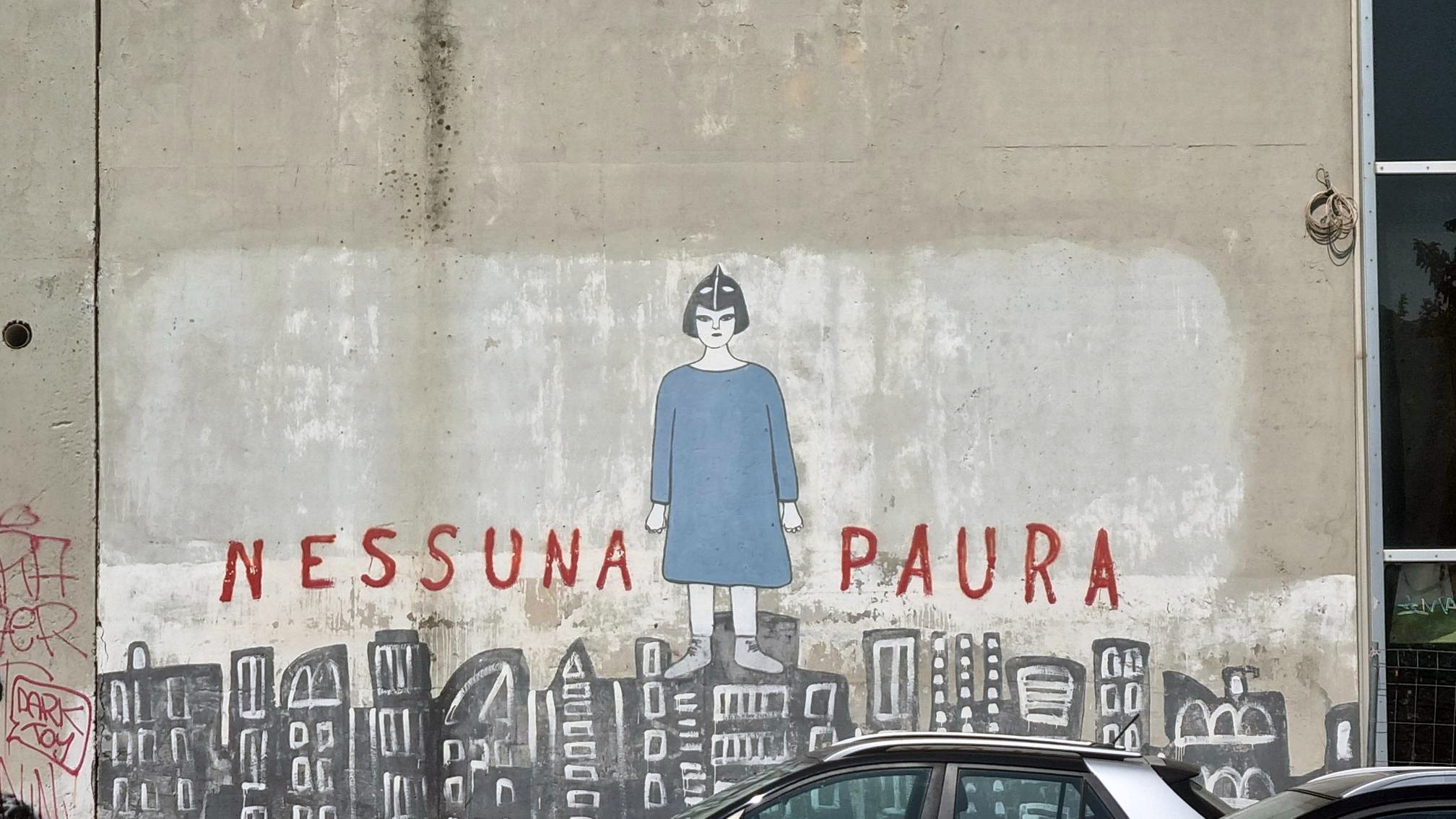
Corviale, Rome
FROM THE FRAGMENT TO THE MATRIX
As we gain altitude, those relationships gradually become visible.
Rome no longer appears as a succession of autonomous parts—the city center, the suburbs, the countryside, and the infrastructure—nor as a simple overlapping of systems.
It appears as a set of interconnected systems: each system has its own logic, but it continually influences the others. They overlap, interrupt one another, come into conflict, and transform one another. And it is precisely in their interactions that something more happens.
Fostering relationships means taking action across different systems; connecting different systems means designing a matrix of urban transformation.
From this perspective, even the shape of Rome takes on a different meaning. Rome grows in fragments, comes to a halt, and starts anew elsewhere. It superimposes eras, functions, and scales without necessarily resolving them; contradiction is not an accident of the city—it is one of its building blocks. What we see is the provisional result of forces acting simultaneously.
That is why Rome is not a finished product. It is an open system, capable of absorbing change without ceasing to be itself. And perhaps this is precisely the central issue for its future.
Do not limit yourself to intervening on individual fragments, but rather understand which relationships can be activated, strengthened, or transformed so that a local intervention can produce effects on a broader scale. From this perspective, architecture is not an isolated object; it is a node in the matrix.
The seagull takes flight again. Corviale slowly fades back into a line on the horizon. Further away, the Tiber, the infrastructure, the neighborhoods, the countryside, and the domes reappear. These are not separate images: they are parts of the same whole.
Perhaps, if we want to change Rome, we need to start right here: by changing the way we look at it.
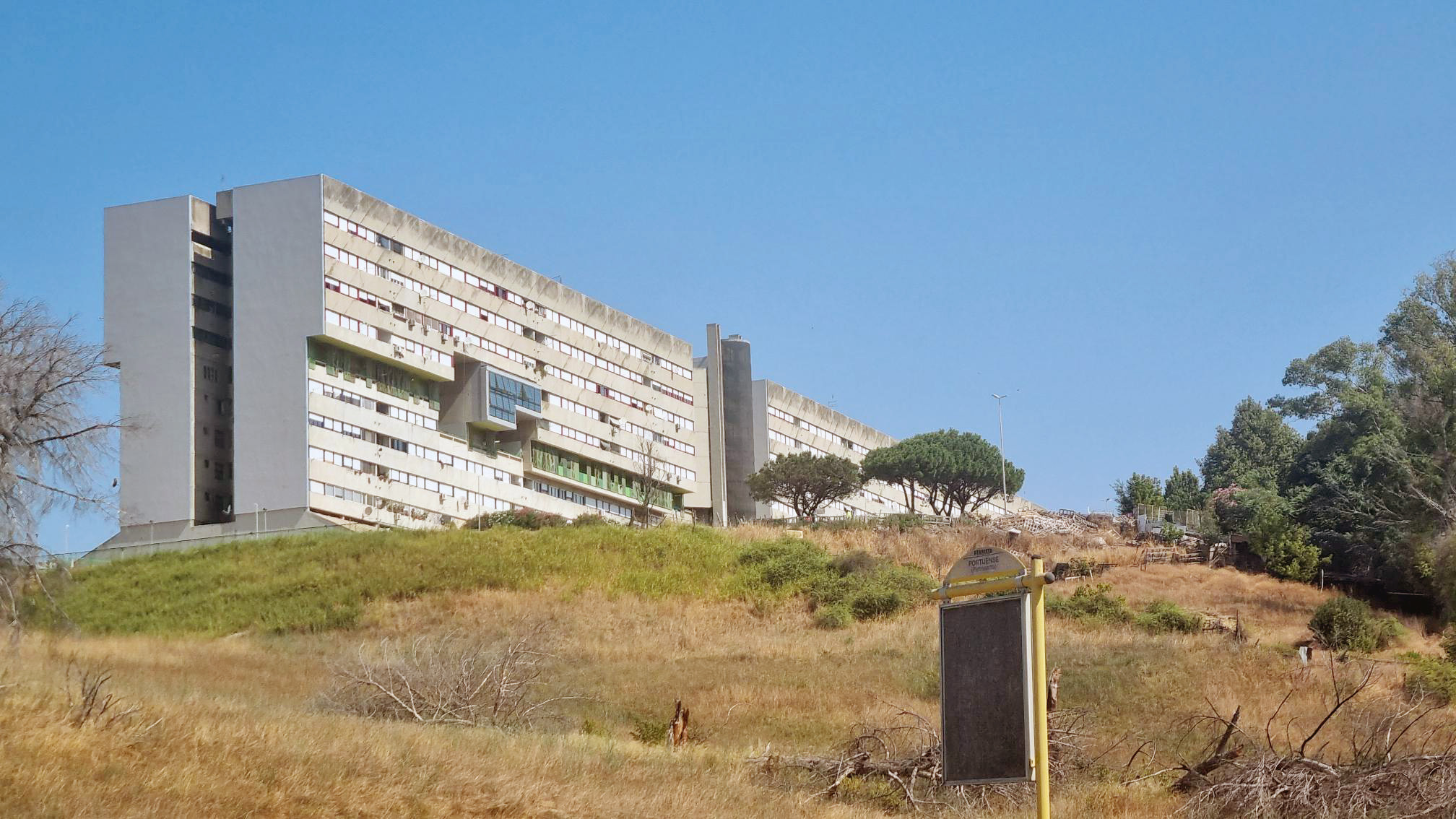
Corviale, Rome
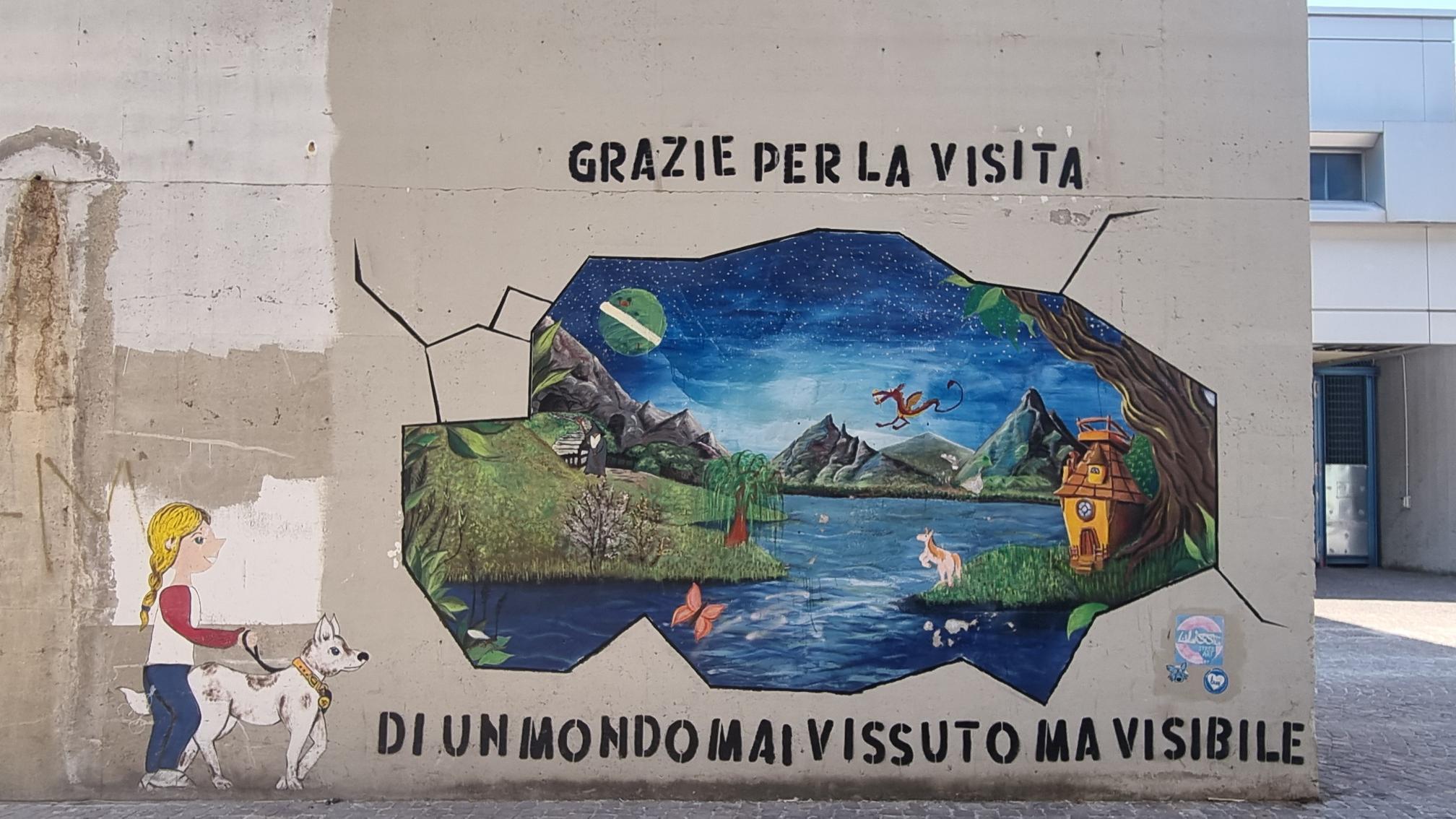
Corviale, Rome
LENS was born out of a desire to put curiosity and mindfulness back at the centre, to broaden our view of the world and continue to talk about beauty and current events, even as our environment — complex and polluted — sometimes seems to be falling apart.


